
In this article
Cats have a wider field of vision
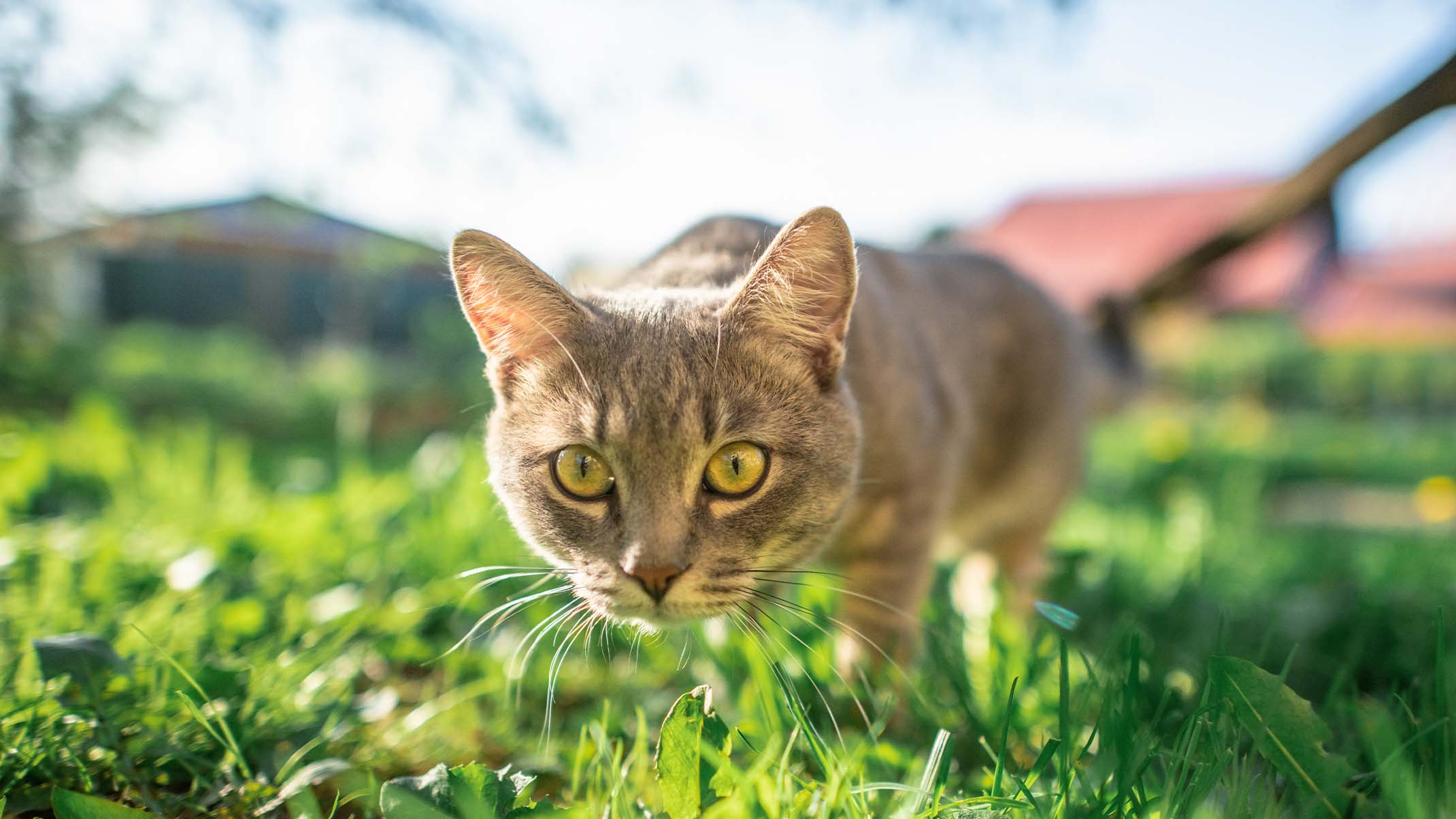
Humans can see about 180 degrees around us without turning our heads. Cats, however, have a slightly wider field of vision, around 200 degrees, thanks to the positioning of their eyes. Their eyes sit slightly more to the sides of the head than ours, giving them greater peripheral awareness without needing to move their head.

Cats can see fewer colors
Cats can see fewer colors than humans because their eyes have fewer cone cells, which are responsible for color detection. While humans are trichromatic (seeing red, green, and blue), cats are believed to be dichromatic, seeing mostly shades of blue and green. Colors like red and pink likely appear gray or dull to them.

Cats can’t see far very well
Cats can’t see far distances as clearly as humans because they are slightly nearsighted. While a human might see something clearly from 100 feet away, a cat would see it more clearly at around 20 feet. Their vision is optimized for short-range focus, which helps them hunt and track prey up close.

Cats cannot see right in front of them very well
Cats have a small blind spot right under their nose, so they can’t clearly see objects that are very close to their face. This is why your cat might not notice a treat placed right in front of them. Instead, they rely on their whiskers and sense of smell to detect what’s directly in front of them.
Cats have a much better night vision than us
Cats have much better night vision than humans, allowing them to see in light levels up to six to eight times lower than we can. Their eyes have more rod cells, which are sensitive to low light, and a reflective layer called the tapetum lucidum that bounces light back through the retina. This gives their eyes that familiar glow in the dark and helps them navigate and hunt even in near-total darkness.


